
Total Fluid Management FAQ
Common Questions About Drilling Fluids, Solids Control, and Haul-off and Disposal
Managing drilling fluids affects far more than mud costs alone. It plays a major role in drilling performance, wellbore stability, environmental compliance, and overall wellsite efficiency.
This FAQ answers common questions operators ask when evaluating the many parts of a total fluid management program, including drilling fluid systems and additives, solids control and closed-loop processes, and haul-off and disposal strategies. Use it as a practical guide to better understand the decisions, risks, and tradeoffs that shape a successful drilling program.
Download the Total Fluid Management FAQ
Section 1: Understanding Fluids Management Basics
Fluid management touches nearly every part of the drilling program, from wellbore stability and rate of penetration to waste handling and cost control. This section covers the basics of total fluid management, how it differs from basic mud service, and why it can have such a major impact on performance and non-productive time (NPT).
A total fluid management service is an end-to-end approach to planning, supplying, monitoring, maintaining, and disposing of drilling fluids throughout the life of a well. Instead of managing separate vendors for mud design, additives, solids control, waste handling, and logistics, operators work through one coordinated program designed to keep the full fluid system running efficiently.
This broader approach can improve communication, reduce delays, and help align drilling fluid systems, solids control, and haul-off and disposal under one management structure. It can also include fluid recycling, waste tracking, daily reporting, and other compliance-focused monitoring throughout the well.
Better drilling fluid management helps reduce non-productive time (NPT) by preventing many of the fluid-related problems that interrupt drilling, including wellbore instability, stuck pipe, lost circulation, kicks, and excessive torque and drag. When mud properties are properly designed, monitored, and maintained, the fluid system is better able to support stable drilling conditions and avoid costly disruptions.
Effective fluids management also includes real-time monitoring and quick adjustments that help correct small issues before they become bigger problems. Stronger solids control plays an important role, too, by helping to maintain fluid properties and optimizing hole cleaning throughout the job.
Drilling fluid management affects well costs far beyond the direct price of mud. A well-managed fluid system can help improve the rate of penetration, reduce non-productive time (NPT), lower waste volume, reduce additive consumption, and limit equipment wear. Poor management can lead to the opposite result, including more dilution, more disposal, more downtime, and more risk of expensive drilling problems.
In practical terms, the right fluids management service helps control both visible costs and hidden costs across the drilling program. That includes the cost of delays, waste handling, remedial work, and avoidable performance issues at the wellsite.
Basic mud service typically focuses on supplying drilling fluid and supporting routine mud checks, while total fluid management covers the broader system around fluid performance. That broader scope can include fluid design, additives, solids control, logistics, closed-loop planning, disposal coordination, reporting, and ongoing engineering support.
In short, basic mud service supports one part of the job, while total fluid management is designed to manage the full fluid life cycle. In most cases, basic mud service is more reactive, while total fluid management is a more proactive approach focused on full-system performance, cost control, and coordination. That makes it easier to coordinate drilling fluid systems, closed-loop systems, and haul off and disposal as one connected program.
Section 2: Planning the Correct Fluid System Understanding Fluids Management Basics
The right fluid program starts long before drilling begins. This section looks at the planning decisions that shape fluid performance, including system selection, logistics, equipment needs, and the factors that should be considered before spud.
Before drilling begins, the drilling fluid system should be planned alongside the equipment, logistics, disposal strategy, safety requirements, and regulatory considerations that could affect the job. That includes selecting the right mud system, estimating expected solids volume, coordinating tanks and support equipment, and confirming trucking and disposal options in advance.
Pre-job planning also helps operators prepare for formation-specific risks, rig limitations, and possible contingency scenarios before they affect the schedule. That planning should also account for assumptions about the well design, supply chain readiness, contingency materials, and communication across service teams. In most cases, better planning up front leads to smoother execution once drilling is underway.
The right drilling fluid system depends on the well design, formation geology, temperature, pressure, rig type, environmental requirements, and the operator’s drilling goals. Some wells are better suited for water-based muds, while others may require oil-based muds or synthetic-based muds because of shale reactivity, lubricity demands, or high-temperature conditions.
Choosing the right system is not just about fluid cost. It also involves balancing drilling performance, wellbore stability, disposal requirements, and overall well economics.
Yes, drilling fluids can be customized for different formations, pressures, temperatures, and operational demands. The right combination of base fluid, additives, and treatment program can help address shale behavior, control losses, improve lubricity, optimize hole cleaning, and reduce common drilling risks.
That is why fluid selection is rarely one-size-fits-all. Panther’s drilling fluid systems and Stealth additives can be tailored to specific basins, formations, and drilling programs to help improve performance in the conditions the well is likely to encounter.
Section 3: Choosing the Right Drilling Mud
Choosing the right drilling mud depends on the well, the formation, and the operational demands of the job. This section explains the differences between water-based, oil-based, and synthetic-based muds, along with the role additives play in reducing drilling risk.
The main difference between water-, oil-, and synthetic-based mud comes down to the fluid that forms the continuous phase and how the system performs under different drilling conditions. Water-based muds are generally more cost-effective and more environmentally friendly, but they can offer less lubricity and shale stability in demanding environments.
Oil-based muds (OBM) typically provide stronger lubricity, thermal stability, and wellbore stability, especially in reactive formations. Synthetic-based muds are designed to offer performance similar to OBM while providing a lower-toxicity alternative that may be better suited for offshore or environmentally sensitive applications.
Water-based mud (WBM) is often a good choice when cost control, operational flexibility, and a lower environmental footprint are important priorities. It is commonly used when the formation and well conditions do not require the higher lubricity or shale stability of an oil-based system.
WBM can also be customized with inhibitors, polymers, dispersants, and other additives to fit a wide range of drilling conditions. For many onshore applications, the right water-based system can provide effective performance at a lower overall cost.
Oil-based mud (OBM) is usually considered when the well requires greater lubricity, better shale inhibition, improved wellbore stability, or enhanced performance in high-temperature, high-pressure (HPHT) environments. It is often a strong fit for directional wells, horizontal wells, reactive shales, and other applications where torque reduction and hole stability matter.
OBM also typically comes with a higher upfront cost than water-based mud. Still, in the right conditions, a well-designed oil-based system can help reduce risk and improve drilling performance enough to justify that added cost.
Synthetic-based mud (SBM) should be considered when an operator wants performance close to oil-based mud but with lower toxicity and a more environmentally acceptable profile. It is often used in offshore, deepwater, or environmentally sensitive applications where regulations and disposal requirements are tighter.
SBM can also offer strong lubricity, stability, and contamination resistance while also supporting waste reduction through reuse and recycling. For the right application, synthetic-based muds can help balance drilling performance with environmental goals.
The right drilling fluid additives depend on the specific risks the well is most likely to face. Shale inhibitors can help control swelling and dispersion, lost circulation material (LCM) can help reduce losses in depleted or fragile zones, and lubricants can help lower torque, drag, and differential sticking.
A well-designed additive program may also support rheology, filtration control, density, and overall fluid stability. Panther’s Stealth additives are designed to help operators match the treatment approach to the basin, formation, and mud system in use.
Section 4: Managing Solids Control & Closed-Loop Systems
Solids control and closed-loop systems play an important role in fluid performance, waste reduction, and overall wellsite efficiency. This section explains how these systems work, why they matter, and what can happen when solids are not managed effectively.
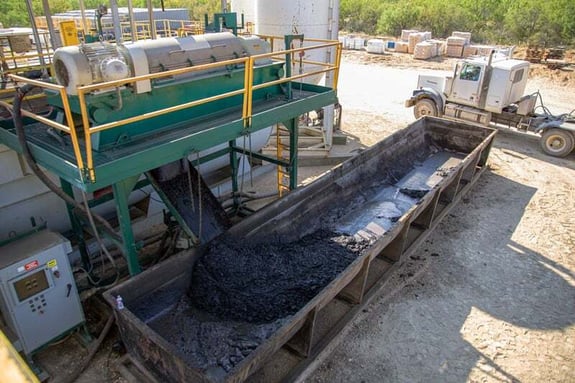
Solids control is the process of separating drill cuttings and unwanted solids from the drilling fluid, so that the mud can be maintained, reused, and circulated more efficiently. This is typically done using equipment such as shakers, hydrocyclones, centrifuges, and related support systems.
Effective solids control services help maintain fluid properties, optimize hole cleaning, reduce dilution, and lower the volume of waste that must be hauled off and disposed of. It is one of the most important parts of a well-run fluids management program.
Solids control has a direct impact on drilling efficiency because it helps prevent unwanted solids from building up in the fluid system. When solids are removed effectively, fluid properties stay more stable, dilution rates can be reduced, fluid life can be extended, and less waste is generated for disposal.
That can lower additive use, reduce cleanup and trucking costs, and help support more consistent drilling performance. In short, better solids control can improve fluid performance while also lowering mud-related costs and disposal volume.
Poor solids control can lead to higher solids content in the mud, unstable rheology, lower drilling efficiency, more dilution, and greater disposal needs. It can also contribute to abrasive wear on equipment, poorer hole cleaning, and difficulty maintaining the fluid properties needed for stable drilling.
At the wellsite, those issues can translate into slower progress, more waste, more maintenance, and a greater chance of fluid-related problems. That is why dependable solids control services are closely tied to overall wellsite performance.
A closed-loop drilling system is a setup that captures, processes, and manages drilling fluids and cuttings without using open reserve pits. Instead, the system relies on tanks and solids control equipment to separate fluids from solids, recover usable mud, and route waste for disposal.
Closed-loop drilling is often chosen to reduce environmental risk, improve control of waste streams, and meet regulatory or landowner requirements. It works closely with solids control and haul-off and disposal as part of a broader fluids management strategy.
Compared to open pits, a closed-loop system can reduce environmental exposure, lower the risk of soil and groundwater contamination, and give operators tighter control over fluids and cuttings. It can also reduce waste volume, shrink the wellsite footprint, and eliminate some of the liability tied to pit construction, pit failures, and remediation.
Closed-loop systems can also support stronger compliance and more efficient solids handling. For operators drilling in regulated or environmentally sensitive areas, closed-loop systems can provide both operational and environmental advantages.
Section 5: Navigating Disposal, Safety, & Compliance
Haul-off and disposal are a critical part of any fluid management program. This section covers how fluids and cuttings are handled properly, how disposal logistics affect drilling operations, and how stronger coordination can support safety, compliance, and day-to-day efficiency.
Disposal starts with understanding the fluid system, the waste stream being generated, and the disposal methods allowed in the area where the well is drilled. Depending on the material and local regulations, approved options may include landfarming, injection, biodegradation, solidification, or other permitted methods.
Proper disposal also requires the right paperwork, qualified transport, permitted facilities, and close coordination throughout the job. A strong haul-off and disposal program helps make sure fluids and cuttings are handled safely, documented correctly, and routed to the appropriate facility.
Avoiding truck-related delays starts with planning disposal logistics before drilling begins, instead of reacting once solids start to build up at the wellsite. That means estimating waste volumes, understanding haul distances, confirming facility availability, and lining up the right number of trucks based on the pace of the operation.
Real-time coordination matters too. When conditions change during drilling, trucking needs can change with them. A haul-off and disposal program managed by an on-site fluids management expert helps operators keep transport moving when needed, rather than waiting on trucks after the fact.
Choosing the best disposal site is not just about finding the closest location. Teams also need to consider permit status, disposal method, road conditions, hauling cost, route efficiency, safety, waste type, and whether the facility is the right fit for the material being generated.
The best option is the one that supports compliance, efficiency, and reliable wellsite operations at the same time. An experienced fluids management team can help evaluate those factors and route material to the most appropriate facility for the job.
Fluids management supports safety and compliance by helping teams maintain control over drilling fluids, cuttings, equipment, and waste from the start of the well through final disposal. When the fluid system is planned and managed correctly, operators are better positioned to reduce spill risk, support proper waste handling, maintain the required documentation, and keep the wellsite moving with fewer interruptions.
It also helps connect mud performance, solids removal, logistics, and disposal into one coordinated process instead of a series of disconnected tasks. That kind of integrated fluid management approach can improve day-to-day efficiency while helping protect the site, the schedule, and the surrounding environment.
See How Total Fluid Management Supports Better Wellsite Performance
A strong fluid management program works best when drilling fluids, solids control, haul-off and disposal, and supporting wellsite services are aligned from the start. When those pieces are managed as one connected system, operators are better positioned to reduce delays, control waste, support compliance, and keep drilling programs moving efficiently.
That is the approach Panther Fluids brings to the wellsite. Backed by more than 200 years of combined experience in fluids management and solids control services, Panther has helped operators reduce drilling fluids costs by up to 25% by managing the full fluid lifecycle with one coordinated team.
Explore Panther's services to see how a total fluid management approach can keep your wellsite running smoothly.
Take the Total Fluid Management FAQ With You
Fill out the form to access a downloadable version for easy reference.